
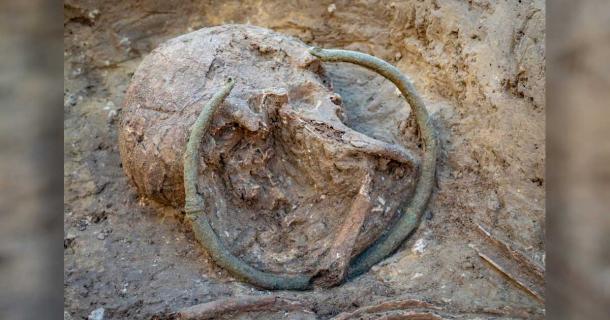
A prehistoric necropolis used between 900 and 600 BC in Aubagne in southeastern France has revealed a first millennium BC individual, bedecked in copper jewelry, after two rounds of excavations in 2022. The transitional late Bronze and early Iron Age necropolis, 3.21 acres (1.3 hectares) wide, had been excavated the first time in 2021, yielding a treasure trove of information that has significantly increased our knowledge of protohistoric southern French funerary customs.
When first uncovered in 2021, ten burials were discovered and three cremation depots have been searched under a massive tumulus, according to a press release by INRAP (French National Institute for Preventive Archaeological Research). Measuring 108 feet (33 meters) in diameter, a tumulus is a mound of earth and stones raised over a grave or multiple graves. This particular tumulus was surrounded by a deep ditch and was probably originally marked by a ring of stones. The burial within was unlikely to be furnished.
from Ancient Origins https://ift.tt/I7w2e68
via IFTTT